
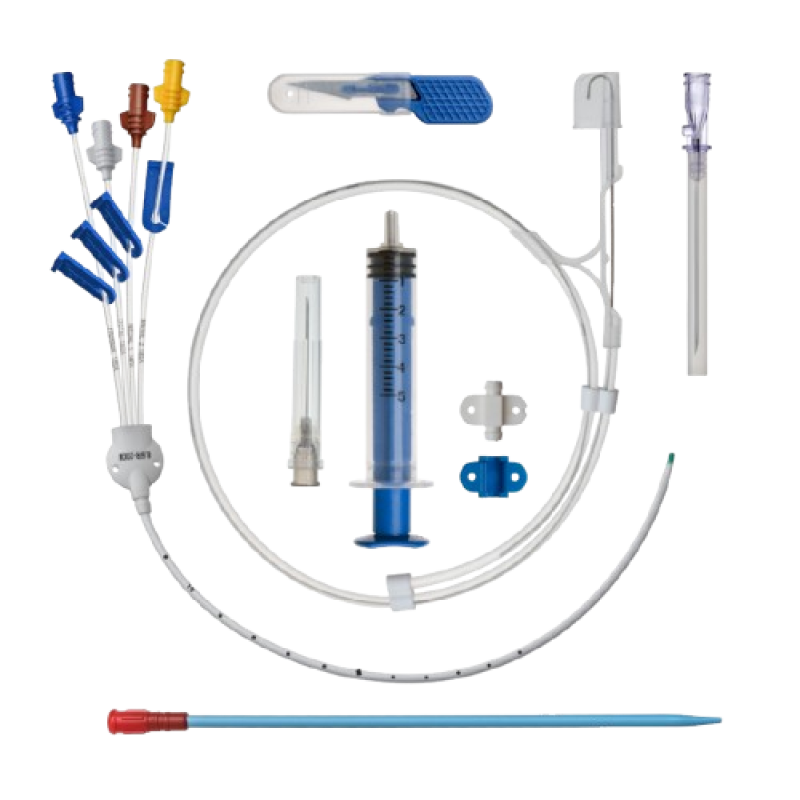
Central Venous Catheters (CVC)
- Product Code: LS
- Availability: In Stock
KES50,000.00
Central Venous Catheter (CVC) — Reliable Central Venous Access for Critical & Long-Term Care
A central venous catheter is a thin, flexible tube inserted into a large vein — typically in the neck (internal jugular), chest (subclavian), or groin (femoral) — with its tip resting in the superior vena cava near the heart, allowing for rapid dilution of substances and minimising irritation to smaller peripheral veins. nih
An indispensable tool in ICUs, operating theatres, oncology units, and emergency departments, CVCs provide reliable, long-term vascular access for complex patient care.
Key Features:
- Single, double, and triple lumen options — multiple lumens allow the simultaneous administration of more than one treatment, blood products, or fluids without interference
- Long indwelling duration — can remain in place for days, weeks, or even years depending on the type, making long-term treatment significantly easier and reducing repeated venepuncture
- Frequent blood sampling — allows repeated blood draws without additional needle sticks, essential for patients requiring frequent laboratory monitoring
- Central venous pressure (CVP) monitoring — enables hemodynamic monitoring directly from the bedside
- Seldinger technique insertion — uses guidewire-assisted placement for safe, accurate positioning confirmed by X-ray
- Made from medical-grade polyurethane or silicone — biocompatible, kink-resistant, and radiopaque for easy imaging confirmation
- Sterile, single-use — individually packaged complete kit including needle, guidewire, dilator, and catheter
-
Clinical Applications: Infusion of vasoactive agents, chemotherapy, and parenteral nutrition; renal replacement therapy, plasmapheresis, and apheresis; central venous pressure monitoring; and rapid administration of fluids and blood products.
Ideal For: ICUs, operating theatres, oncology units, renal dialysis centres, emergency departments, and long-term care facilities.